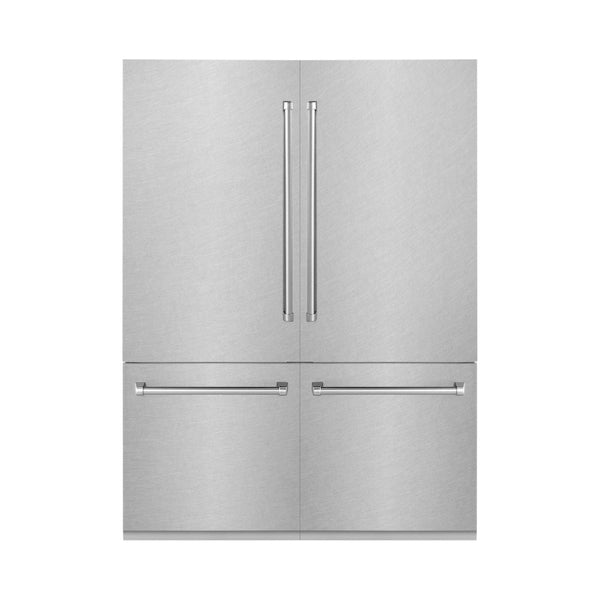
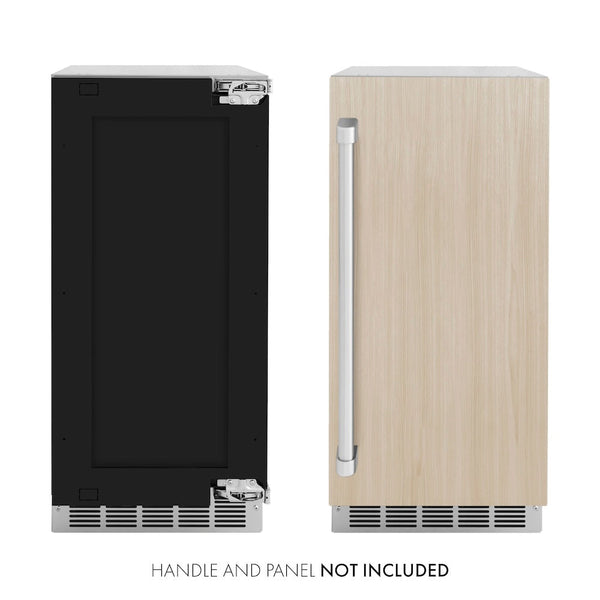
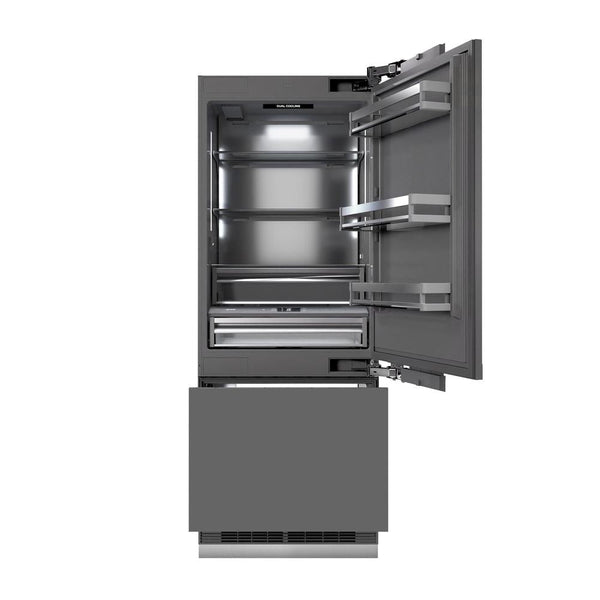
For a refrigerator to fit seamlessly into your kitchen, accurate measurements matter just as much as the appliance’s style, capacity, and features.
Buying a refrigerator that fits your kitchen sounds straightforward, but measuring the available space involves more than checking the width of the opening. A refrigerator can technically fit between two cabinets and still create problems if there isn't enough room for the doors to open, the freezer drawer to extend, or air to circulate around the appliance.
This is particularly important when replacing an existing refrigerator. Your old appliance may fit comfortably in the space, but a newer model can have different dimensions, handle designs, hinge locations, door-swing requirements, and ventilation needs.
Whether you're considering a French door refrigerator, side-by-side model, bottom freezer, or built-in refrigerator, taking accurate measurements before you shop can prevent installation problems and unexpected adjustments.
Why Refrigerator Measurements Matter
Refrigerators come in a wide range of widths, heights, depths, and configurations. Two models described as "36-inch refrigerators" may not have identical dimensions once doors, handles, hinges, and required clearances are taken into account.
The space between your kitchen cabinets is only one part of the measurement.
You also need to know how much room is available above the refrigerator, how far it can extend into the kitchen, and whether the doors or drawers can open completely.
A refrigerator that fits tightly into an opening may look neat when closed but become difficult to use if the doors cannot open far enough to access shelves or remove drawers.
Taking measurements before shopping gives you a clear starting point and helps narrow your options.
Start With the Refrigerator Opening
The first measurement to take is the opening where the refrigerator will be installed.
Measure the width at several points rather than measuring only once. Cabinets and walls are not always perfectly square, and the opening can sometimes vary slightly from top to bottom.
Measure near the top, middle, and bottom of the opening. Use the smallest measurement when determining the maximum refrigerator width that can fit.
For example, if the opening measures slightly different widths at different heights, the narrowest measurement is the safer figure to use.
Do the same with the height. Measure from the floor to the lowest point of the cabinet or structure above the refrigerator.
If you are replacing an existing appliance, don't assume the old refrigerator's dimensions represent the maximum available space. Measure the actual opening yourself.
How to Measure Refrigerator Width
Width is usually the easiest measurement to understand, but it is still important to be precise.
Place the measuring tape between the two cabinets or walls where the refrigerator will sit. Measure the width at the top, middle, and bottom.
If your refrigerator opening is surrounded by cabinetry, look for any trim, molding, handles, or protruding surfaces that could reduce the available space.
Record the smallest width.
You should then compare this number with the manufacturer's stated refrigerator width. Don't rely only on a product name such as "30-inch" or "36-inch." The actual dimensions can be slightly different.
Also check whether the manufacturer's measurement includes the doors and handles or refers only to the refrigerator cabinet.
How to Measure Refrigerator Height
Next, measure the height of the opening.
Start from the finished floor and measure to the bottom of the cabinet or countertop structure above the refrigerator.
Take measurements on both the left and right sides if the refrigerator will be installed beneath cabinetry. If the ceiling or cabinet above is uneven, use the lowest measurement.
Height is particularly important for built-in refrigerators because they are often designed around specific cabinet dimensions.
A refrigerator that is only slightly too tall may not fit at all, so don't leave height measurements until the end of the buying process.
Remember to account for flooring changes as well. If you're remodeling the kitchen and plan to install new flooring, consider how the finished floor height could affect the available clearance.
How to Measure Refrigerator Depth
Depth is one of the most commonly overlooked refrigerator measurements.
Measure from the wall at the back of the refrigerator opening to the front edge of the surrounding cabinets or countertop.
Then consider how far the refrigerator itself will extend beyond the cabinets.
A standard-depth refrigerator may project farther into the kitchen, while a counter-depth model is generally designed to sit closer to the surrounding cabinetry.
However, counter-depth doesn't necessarily mean completely flush with the cabinets. Doors and handles can still extend beyond the cabinet line.
When comparing refrigerator dimensions, check the manufacturer's measurements carefully and determine whether the stated depth includes the doors and handles.
Don't Forget the Doors and Handles
A refrigerator's cabinet may fit perfectly into your opening while the doors or handles extend farther than expected.
This is especially important in kitchens with narrow walkways or islands positioned directly opposite the refrigerator.
Measure the space in front of the appliance and consider the path the doors will take when opened.
For French door and side-by-side refrigerators, the two-door design can reduce the amount of swing space required for each individual door.
Bottom freezer models, however, require enough space in front for the freezer drawer to pull outward.
A refrigerator is not properly sized if it only fits when all doors and drawers are closed.
Check Door Swing Clearance
Door swing is a critical part of refrigerator installation.
Open the refrigerator doors as far as the manufacturer recommends and determine whether they will hit a nearby wall, cabinet, island, or another appliance.
This can be particularly important when the refrigerator is positioned directly beside a wall. Even if the door technically opens, insufficient clearance may prevent you from removing shelves or drawers for cleaning.
Some refrigerators also require a specific amount of side clearance to open the doors fully.
Always check the installation specifications for the exact model rather than relying on general assumptions about refrigerator types.
Consider the Freezer Drawer Clearance
If you're considering a French door or bottom freezer refrigerator, don't forget about the freezer.
The lower drawer needs enough room to extend outward completely.
Measure the distance from the front of the refrigerator opening to the nearest island, cabinet, table, or other obstruction.
Imagine the freezer drawer fully extended and make sure there is enough room to stand comfortably in front of it.
This is especially important in kitchens with islands. A refrigerator may fit perfectly into its cabinet opening but still be inconvenient if the freezer drawer hits the island every time you open it.
Measure the Kitchen Entry Path
A refrigerator doesn't simply need to fit into the final installation space. It also needs to make it through the house.
Measure doorways, hallways, stairways, turns, and other narrow areas between the delivery entrance and the kitchen.
Pay attention to the narrowest point along the route.
The refrigerator's packaging dimensions may be larger than the appliance itself, so check delivery requirements before the appliance arrives.
In some situations, doors may need to be removed temporarily to move the refrigerator through a narrow opening. This should only be done according to the manufacturer's or installer's instructions.
Planning the delivery path in advance can prevent an appliance from arriving at your home only to discover that it cannot reach the kitchen.
Leave Room for Ventilation
Refrigerators need appropriate airflow around the appliance.
The required clearance varies depending on the model and installation type, so consult the manufacturer's installation instructions.
Do not assume that pushing a refrigerator tightly against the wall or cabinetry is always acceptable.
Insufficient clearance can interfere with ventilation and may affect appliance operation.
Built-in refrigerators can have different ventilation requirements from freestanding models, which is another reason to check the specifications for the exact refrigerator you're considering.
Standard-Depth vs. Counter-Depth Refrigerators
Depth is often where homeowners have to make an important choice.
Standard-depth refrigerators generally extend farther into the kitchen but can provide substantial interior storage.
Counter-depth refrigerators are designed to sit closer to the surrounding countertops and cabinets, creating a more integrated appearance and potentially leaving more walkway space.
However, a counter-depth refrigerator isn't automatically the right choice for every kitchen.
If maximum storage capacity is the priority, a deeper refrigerator may provide more usable space. If kitchen flow and a streamlined appearance matter more, a counter-depth design may be worth considering.
Compare actual dimensions rather than relying on the term "counter-depth" alone.
French Door Refrigerator Measurements
French door refrigerators typically have two upper refrigerator doors and a lower freezer drawer.
When measuring for one, pay attention to three areas: the cabinet opening, door swing, and freezer drawer clearance.
The upper doors may require side clearance to open properly, especially if the refrigerator is installed next to a wall.
The lower freezer drawer needs front clearance, while the refrigerator's depth determines how far the appliance projects into the kitchen.
Because French door models can vary considerably in size, measure the space specifically for the model you intend to purchase.
Side-by-Side Refrigerator Measurements
Side-by-side refrigerators have vertically divided refrigerator and freezer compartments.
Their relatively narrow doors can be useful in kitchens where door swing is limited, but the appliance still needs adequate side clearance depending on the hinge and door design.
The overall width and depth should be measured carefully, especially when the refrigerator is located near a wall.
Also consider whether the doors can open wide enough to allow interior shelves and drawers to be removed.
This is a small detail that can make a significant difference when cleaning or maintaining the appliance.
Bottom Freezer Refrigerator Measurements
Bottom freezer refrigerators place the freezer below the fresh-food compartment.
For these models, pay particular attention to the space directly in front of the appliance.
If the freezer uses a pull-out drawer, it needs sufficient clearance to open fully.
The refrigerator doors also need enough room to swing open without hitting surrounding surfaces.
If the kitchen has a narrow walkway, measure the refrigerator's projected depth with the doors open as well as closed.
Built-In Refrigerator Measurements
Built-in refrigerators require especially careful planning. Unlike many freestanding refrigerators, built-in models are designed to work within specific cabinetry and installation dimensions.
The cabinet opening needs to meet the manufacturer's width, height, and depth requirements. Ventilation and door clearance also need to be considered.
Some built-in refrigerators are taller than standard freestanding models, so check the height carefully.
If you are designing a new kitchen, it is generally better to select the refrigerator before finalizing the surrounding cabinetry. This allows the cabinet opening and surrounding clearances to be designed around the actual appliance specifications.
How Much Clearance Should You Leave?
There isn't one universal clearance number that applies to every refrigerator.
Required spacing depends on the specific appliance, installation method, ventilation design, and manufacturer instructions.
Rather than applying a generic measurement, look at the installation guide for the refrigerator you intend to purchase.
Use the manufacturer's required clearances as the minimum starting point, then consider whether additional space would make the appliance easier to use.
For example, a refrigerator may technically meet the minimum door clearance but still be awkward to operate if a nearby island is positioned too close.
Measure Around Obstacles
Look beyond the refrigerator opening itself.
Check for:
- Nearby walls
- Kitchen islands
- Cabinets
- Countertops
- Ovens
- Dishwashers
- Tables
- Doorways
Even a small obstruction can affect how comfortably a refrigerator can be opened.
If a cabinet sticks out farther than neighboring cabinets, measure from that point rather than from the wall behind it.
The goal is to understand the three-dimensional space the refrigerator will occupy—not just the rectangular opening where its body sits.
Check Plumbing and Electrical Locations
Some refrigerators require a water connection for features such as an ice maker or water dispenser.
Before installation, check where the water supply line is located and whether it can be accessed without interfering with the refrigerator.
The electrical outlet should also be positioned according to the manufacturer's installation requirements.
Avoid using extension cords unless specifically permitted by the manufacturer. The refrigerator should be connected according to applicable installation instructions and local electrical requirements.
If you're remodeling, planning these connections before the cabinets are finalized can make installation considerably easier.
Capacity: How Much Refrigerator Space Do You Need?
Once you know the physical dimensions of your kitchen, consider the amount of storage you actually need.
Refrigerator capacity is commonly measured in cubic feet, but capacity should not be considered in isolation.
A refrigerator with a large advertised capacity may have an interior arrangement that doesn't suit your storage habits.
Think about how much fresh produce, dairy, beverages, leftovers, frozen food, and large containers you typically keep at home.
A household that cooks frequently may prioritize wide shelves and flexible storage. Someone who buys groceries more frequently in smaller quantities may not need the same capacity.
Don't Assume Bigger Is Better
A larger refrigerator can provide more storage, but it can also occupy more valuable kitchen space.
If a larger appliance blocks a walkway, restricts a cabinet door, or makes it difficult to open the freezer, its additional capacity may not be particularly useful.
The best refrigerator size balances storage capacity with the physical limitations of the kitchen.
Think about the refrigerator as part of the entire room rather than an isolated appliance.
Create a Measurement Checklist
Before shopping, write down your measurements.
Record the maximum width, height, and depth of the installation space. Then record the available space in front of the refrigerator, including the distance to any island or opposing cabinets.
Measure the width and height of the narrowest doorway or passageway on the delivery route.
Also note the location of the electrical outlet and water connection if required.
Having these measurements available when comparing refrigerators makes it much easier to eliminate models that won't work before spending time evaluating their features.
Compare Manufacturer Specifications Carefully
Once you have your measurements, compare them with the exact refrigerator model you're considering.
Look for the manufacturer's specification sheet or installation guide rather than relying solely on retailer listings.
Check the appliance width, height, depth, door clearance, hinge requirements, ventilation requirements, and installation opening.
Pay attention to whether dimensions include handles and doors.
If anything is unclear, confirm the installation requirements before purchasing.
Final Thoughts
Measuring your kitchen before buying a refrigerator can save you from one of the most frustrating appliance problems: purchasing a refrigerator that technically fits but doesn't work comfortably in the space.
Start with the installation opening and measure the width, height, and depth at multiple points. Then consider door swing, freezer drawer clearance, ventilation, nearby cabinets, islands, and the route the refrigerator will take during delivery.
The refrigerator's dimensions should always be evaluated alongside your kitchen layout. A French door refrigerator may provide excellent wide storage, a side-by-side model may work well where door clearance is limited, and a bottom freezer refrigerator may prioritize convenient fresh-food access. Built-in models require even more careful attention to cabinet dimensions and installation requirements.
Most importantly, don't rely on the refrigerator's advertised size alone. Check the exact manufacturer's specifications for the model you plan to buy and compare those measurements with your kitchen.
A few minutes spent measuring carefully can make the difference between an appliance that simply fits and one that works comfortably as part of your kitchen every day.