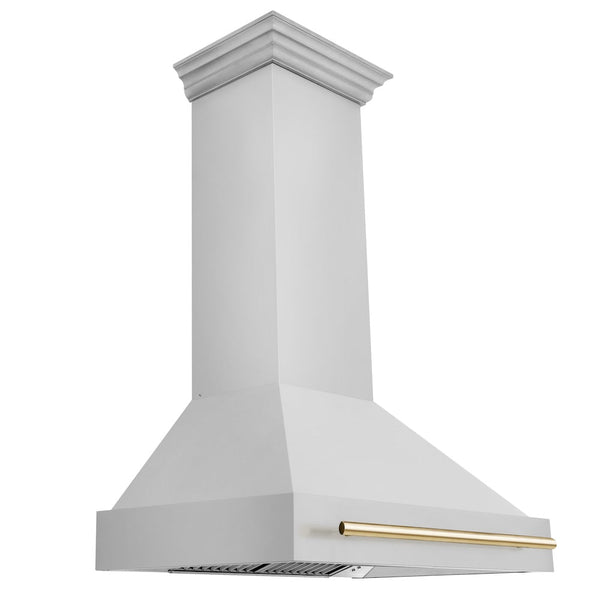
There is a science to clean air that begins long before smoke and odors become noticeable. In the modern kitchen, effective ventilation is not just about removing pollutants it is about controlling airflow to create a cleaner, healthier, and more comfortable cooking environment.
Cooking produces smoke, grease particles, steam, heat, and odors, and a range hood's job is to pull those pollutants out of the kitchen before they spread through the rest of the house. The most important specification to understand when shopping for a range hood is CFM, which stands for cubic feet per minute. This number measures how much air the hood is capable of moving in a single minute, and it ultimately determines how well the hood will keep up with whatever is happening on your cooktop.
If the CFM rating is too low for your kitchen, smoke, steam, and grease will tend to linger in the air rather than being pulled away. On the other hand, if the CFM is too high for the space, it can create its own set of problems, including unnecessary noise, higher energy use, and even air pressure issues within the home. Choosing the right airflow level matters for both how well the hood performs and how comfortable your kitchen feels day to day.
What Does CFM Mean in a Range Hood?
CFM stands for cubic feet per minute, and it measures how much air a Range Hood can remove from the kitchen every minute it runs. A hood rated at 400 CFM is capable of moving 400 cubic feet of air per minute, while a model rated at 700 CFM moves significantly more air and is generally better suited to heavier cooking.
Higher airflow helps remove a wide range of cooking byproducts, including smoke, steam, grease, cooking odors, excess heat, and, in the case of gas ranges, combustion byproducts as well. The correct CFM for any given kitchen depends on several interrelated factors, including the width of the range, whether the cooktop is gas or electric, the total burner output, the overall size of the kitchen, the ceiling height, the length of the duct run, and how frequently and intensively the household cooks.
Many homeowners focus primarily on a hood's design or finish when shopping, but airflow capacity is really the feature that determines how well the hood will actually perform once it is installed and in daily use.
Why Proper Range Hood Sizing Matters
A properly sized hood does more than just look good above the stove. It genuinely improves indoor air quality and helps prevent grease from gradually building up on cabinets, walls, and other surfaces throughout the kitchen.
Hoods that are undersized for the cooking they need to handle often struggle during high-heat frying, stir-frying, grilling, searing, or any situation where multiple burners are running at once. In these moments, an underpowered hood simply cannot keep pace with the volume of smoke and steam being produced.
Oversized hoods create a different set of problems. They can generate excessive fan noise, waste energy, create negative air pressure within the home, and lead to a loss of heated or cooled air as the larger volume of conditioned air gets pulled outside. In some areas, oversized hoods may even trigger makeup air requirements under local building codes. Correct sizing is really about finding the balance between strong ventilation performance and practical, comfortable everyday use.
Basic Range Hood CFM Calculator
The simplest way to get a starting estimate for range hood CFM is to consider both the width of your cooking surface and the type of cooking you do most often.
-
Light electric cooking: A range hood with a 250–400 CFM rating is generally sufficient for basic cooking needs.
-
Standard gas cooking: Most gas cooktops require around 400–600 CFM to effectively remove heat, smoke, and odors.
-
Frequent frying or grilling: If you regularly cook at high temperatures, consider a hood rated between 600–900 CFM for better ventilation.
-
Professional-style gas ranges: These produce much more heat and combustion byproducts, so they often require 900–1200+ CFM range hoods.
-
Important note: These numbers are only starting estimates. The ideal CFM depends on factors like your cooking habits, cooktop size, kitchen layout, and ventilation setup.
These figures are best thought of as starting points rather than final answers, since a more accurate calculation will depend on the specifics of your cooking setup, which the following sections walk through in more detail.
How to Calculate Range Hood CFM for Gas Ranges
Gas ranges generally require stronger ventilation than electric ranges because the combustion process releases additional heat, moisture, and gases directly into the kitchen air. The most common and widely used method for sizing a hood for a gas range relies on the total BTU output of the cooktop.
The first step is to add up the BTU ratings of every burner on the range to arrive at a total BTU figure. As an example, consider a cooktop with a front left burner rated at 18,000 BTU, a front right burner rated at 15,000 BTU, a rear left burner rated at 12,000 BTU, a rear right burner rated at 10,000 BTU, and a center burner rated at 18,000 BTU. Adding these together gives a total BTU output of 73,000.
Once you have the total BTU figure, the next step is to divide that number by 100, since industry guidelines commonly recommend a CFM rating roughly equal to BTU output divided by 100. For a cooktop with 73,000 total BTU, dividing by 100 gives 730 CFM. In a case like this, a hood rated somewhere between 700 and 800 CFM would usually provide sufficient ventilation for the cooking surface.
Looking at this relationship more broadly, a cooktop with up to 40,000 total BTU generally pairs well with a hood rated between 400 and 450 CFM. A cooktop in the 40,000 to 60,000 BTU range tends to call for a hood somewhere between 500 and 650 CFM. For cooktops producing 60,000 to 80,000 BTU, a hood rated between 700 and 850 CFM is generally appropriate. Cooktops in the 80,000 to 100,000 BTU range typically pair well with hoods rated between 900 and 1000 CFM, and anything above 100,000 BTU generally calls for a hood rated at 1200 CFM or higher. This BTU-based approach is widely considered one of the most reliable methods for determining the right CFM for a gas range setup.
How to Calculate CFM for Electric Ranges
Electric cooktops produce far less combustion output than gas ranges, which means their ventilation needs are generally lower as well. The common guideline for electric ranges is to allow roughly 100 CFM for every linear foot of cooktop width.
-
Electric cooktops produce less combustion output than gas ranges, so they typically require lower ventilation capacity.
-
A common guideline for electric ranges is to allow around 100 CFM for every linear foot of cooktop width.
-
For example, a 30-inch electric range equals 2.5 linear feet of cooking surface.
-
Using the calculation: 2.5 × 100 = 250 CFM, making 250 CFM the minimum recommended airflow.
-
Many homeowners choose a stronger range hood between 350–500 CFM for improved removal of smoke, odors, and cooking vapors during heavier use.
Range Hood Size Guide by Stove Width
While CFM gets most of the attention, the physical width of the range hood matters just as much for effective ventilation. As a general rule, the hood should be at least as wide as the cooking surface beneath it, and in many cases, choosing a slightly wider hood is the better option.
For a 24-inch range, a hood somewhere between 24 and 30 inches wide is generally recommended. A 30-inch range pairs well with a hood between 30 and 36 inches wide. For a 36-inch range, a hood between 36 and 42 inches wide tends to work best. Larger 48-inch ranges generally call for a hood between 48 and 54 inches wide, and 60-inch ranges typically pair with hoods between 60 and 66 inches wide.
For wall-mounted installations, allowing the hood to extend about 3 inches beyond each side of the cooktop can meaningfully improve smoke capture. Island hoods often benefit from even more coverage than this, simply because there are no surrounding walls or cabinets to help direct rising air toward the hood.
CFM Recommendations by Range Size
A 30-inch range is one of the most common sizes found in residential kitchens, and its ventilation requirements depend on whether it is electric or gas-powered. Choosing the right CFM helps maintain good air quality while removing smoke, grease, and cooking odors effectively.
-
30-inch electric range: A CFM rating between 250 and 400 CFM is usually suitable for everyday cooking.
-
30-inch standard gas range: Typically requires around 400–600 CFM for proper ventilation.
-
30-inch gas range with heavy cooking: Frequent frying, searing, or high-heat cooking may require 600–700 CFM.
-
The ZLINE KECOM-30 is a commonly selected range hood option for residential kitchens needing moderate to strong airflow.
A 36-inch range usually has higher heat output, especially when equipped with powerful burners, so it requires stronger ventilation compared to a 30-inch model. Larger cooking surfaces create more smoke, heat, and airborne grease, making proper CFM selection even more important.
-
36-inch standard range: Generally works well with 600–900 CFM ventilation.
-
36-inch professional-style gas range: Often requires 900–1200 CFM due to higher burner output and increased heat production.
-
The ZLINE KB-36 is designed for larger cooking areas where higher airflow capacity is needed.
Island range installations require special consideration because airflow behaves differently compared to wall-mounted cooktops. Since an island hood is exposed on multiple sides, smoke and steam can spread more easily throughout the kitchen.
-
Island cooktops typically need higher CFM ratings than similar wall-mounted ranges.
-
It is often recommended to add around 100–200 extra CFM for island installations.
-
Additional airflow may also be needed for Open-concept kitchens , High ceilings , Long duct runs ,Frequent high-temperature cooking.
A model such as the ZLINE 8654STZ-36 is designed with island installations in mind and helps provide the stronger ventilation needed for these kitchen layouts.
Kitchen Size and CFM Requirements
Rather than basing CFM purely on the cooktop itself, some installers prefer to size ventilation according to the total volume of the kitchen. This approach tends to work especially well in open-concept homes, where the kitchen blends into surrounding living spaces and the cooktop-based methods may not fully capture the scale of the area that needs ventilation.
The general guideline behind this method is that a kitchen should exchange its air approximately fifteen times per hour. To put this into practice, you multiply the kitchen's length, width, and ceiling height together to find its volume in cubic feet, multiply that figure by fifteen to account for the desired number of air exchanges per hour, and then divide the result by sixty to convert from an hourly figure into the CFM rating, which is measured per minute.
As an example, consider a kitchen that measures 12 feet long, 15 feet wide, with an 8-foot ceiling. Multiplying these dimensions together gives a volume of 1,440 cubic feet. Multiplying that volume by fifteen gives 21,600, and dividing that figure by sixty gives 360. Based on this calculation, a kitchen of this size would generally need at least 360 CFM of ventilation capacity. If the kitchen includes a gas range or sees frequent high-heat cooking, it is generally a good idea to increase airflow beyond this baseline minimum.
Duct Size and CFM Performance
Even the most powerful range hood can underperform if it is paired with the wrong ductwork. Ducts that are too small for the hood's airflow rating tend to restrict that airflow and increase noise levels at the same time.
As a general guideline, hoods rated up to 400 CFM typically pair well with a 6-inch duct. Hoods rated between 400 and 600 CFM generally call for a duct somewhere between 6 and 8 inches in diameter. For hoods rated between 600 and 900 CFM, a duct between 8 and 10 inches is usually appropriate, and hoods rated between 900 and 1200 CFM typically require a duct between 10 and 12 inches in diameter. Whatever the specific numbers, it is always important to follow the manufacturer's duct specifications for the particular hood you are installing.
How Duct Length Affects CFM
The length and configuration of a duct run can meaningfully reduce a hood's actual airflow performance compared to its rated CFM. Common sources of airflow restriction include sharp elbows, flexible ducting, long horizontal runs, and resistance from the roof cap where the duct exits the home.
To compensate for these factors, it is common practice to add extra CFM capacity depending on the specifics of the installation. A long duct run might call for an additional 100 CFM, while multiple elbows in the duct path might justify adding somewhere between 50 and 100 CFM. Island installations often warrant an additional 100 to 200 CFM, and ceilings higher than 9 feet may call for an extra 100 CFM as well. In general, straight and relatively short duct runs provide the best airflow efficiency and require the least amount of compensation.
Wall Mount vs Island Range Hood CFM
Wall-mounted hoods tend to be more efficient overall because the wall behind the cooktop helps direct rising smoke and steam toward the hood rather than letting it disperse in multiple directions. Island hoods, by contrast, lose airflow on all sides since there is no wall to help contain it, which is why they generally need more power to achieve the same level of capture.
As a general comparison, both wall-mounted and under-cabinet hoods can typically be sized using standard recommendations without much adjustment. Island hoods, however, generally benefit from an additional 100 to 200 CFM beyond what a standard calculation would suggest. The ZLINE 8654STZ-36 is built specifically with island installations in mind, reflecting the additional airflow that these setups often require.
Does Higher CFM Mean Better Performance?
Not necessarily. Higher CFM only translates into better real-world performance when several other factors are also working correctly. The hood's canopy needs to be shaped and positioned in a way that actually captures rising smoke and steam, the ductwork needs to support the airflow the blower is capable of producing, and the blower itself needs to be well matched to the cooking demands it is meant to handle.
In practice, a poorly designed hood rated at 1200 CFM may actually perform worse than a well-designed hood rated at only 700 CFM if that smaller hood has better capture efficiency. Factors such as hood depth, filter design, mounting height, duct quality, and the overall capture area all play an important role in determining how effective a hood is in practice, regardless of its raw CFM number.
Recommended Mounting Height
The height at which a hood is mounted above the cooktop has a direct impact on how well it captures smoke and steam. If a hood is mounted too high above the cooking surface, smoke can escape into the surrounding kitchen before it ever reaches the hood's filters.
As a general guideline, under-cabinet hoods are typically installed between 24 and 30 inches above the cooktop. Wall-mounted hoods are generally installed somewhere between 28 and 36 inches above the cooktop, while island hoods are typically mounted between 30 and 36 inches above the cooking surface. Professional-style ranges with very high BTU output may call for a larger capture area and, in some cases, a lower installation height than these general ranges suggest.
Recirculating vs Ducted Range Hoods
Range hoods generally fall into one of two categories based on how they handle the air they pull in. Ducted hoods vent that air directly outside the home, while recirculating hoods filter the air and send it back into the kitchen rather than venting it outdoors.
Ducted range hoods tend to offer better smoke removal, better grease control, and the ability to remove heat and moisture from the kitchen along with cooking byproducts, all of which adds up to higher overall efficiency. These hoods tend to be the best fit for gas cooking, frequent cooking, and larger kitchens where the volume of air that needs to be moved is significant.
Recirculating range hoods, on the other hand, are generally easier to install, work well in apartments where exterior venting is not an option, and do not require any exterior ductwork at all. The trade-off is that they tend to be less efficient at removing odors, rely on charcoal filters that need periodic replacement, and are generally less effective for heavy cooking compared to a ducted system. If you are working with a recirculating setup, choosing a slightly higher CFM rating than you otherwise might can help compensate for these inherent airflow limitations.
Noise Levels and CFM
Higher airflow often comes with higher noise levels, and range hood noise is typically measured in a unit called sones. As a general guideline, noise levels between 1 and 3 sones are considered quiet, levels between 4 and 5 sones are considered moderate, levels between 6 and 8 sones are considered loud, and anything above 9 sones is considered very loud.
A well-designed hood should strike a reasonable balance between airflow capacity and acceptable sound levels, rather than sacrificing one entirely for the other. Variable-speed blowers are particularly helpful in this regard, since they allow the hood to run quietly during light cooking and only ramp up to louder, higher-airflow settings when the cooking actually demands it.
Makeup Air Requirements
Many local building codes require makeup air systems for range hoods above a certain CFM threshold, which is commonly set around 400 CFM. A makeup air system works by replacing the air that the hood exhausts from the home, which helps prevent the negative air pressure that can otherwise build up when a powerful hood is running.
Without an adequate makeup air system in place, homes with high-CFM hoods can experience a range of issues, including backdrafting, reduced HVAC efficiency, smoke being pulled back into the room from fireplaces, and pressure problems that make exterior doors difficult to open or close. Before installing a larger ventilation system, it is worth checking local building regulations to understand whether makeup air provisions apply to your installation.
Common Mistakes When Choosing Range Hood CFM
One of the most common mistakes homeowners make is choosing a hood based mainly on appearance. A stylish design does not always guarantee strong performance, so it is important to evaluate factors like CFM rating, capture area, and duct compatibility along with the hood’s look. Ignoring gas range output is another mistake, as professional gas ranges require much stronger ventilation than electric models.
-
Low-CFM ventilation with high-BTU burners can lead to smoke, heat, and odors staying in the kitchen.
-
Incorrect duct sizing can reduce airflow and put extra strain on the blower.
-
Installing the hood too high weakens its ability to capture smoke and steam effectively.
-
Choosing excessive CFM may create unnecessary noise, air pressure issues, and wasted airflow.
The ideal range hood airflow should be based on your cooking habits, range type, kitchen layout, and overall ventilation needs.
Best CFM Range by Cooking Style
For light cooking, which typically includes activities such as boiling, simmering, microwaving, and occasional sautéing, a CFM rating between 250 and 400 is generally sufficient.
For moderate cooking, which covers everyday cooking routines, pan frying, and regular use of multiple burners, a CFM rating between 400 and 700 is generally more appropriate.
For heavy cooking, which includes activities such as stir frying, grilling, frequent frying, and high-BTU gas cooking, a CFM rating between 700 and 1200 or higher is typically recommended.
Example CFM Sizing Scenarios
The first scenario involves a standard 30-inch gas range with a total BTU output of 55,000, used for moderate cooking in a wall-mounted installation. Dividing 55,000 by 100 gives 550 CFM, and the recommended range for this setup would be somewhere between 550 and 650 CFM. The ZLINE KECOM-30 would be a suitable option for this kind of installation.
The second scenario involves a 36-inch professional range with a total BTU output of 95,000, used for frequent searing and frying in an open-concept kitchen. Dividing 95,000 by 100 gives 950 CFM, and the recommended range for this setup would be between 900 and 1200 CFM. The ZLINE KB-36 would be a suitable option here.
The third scenario involves a 36-inch gas cooktop installed in an island layout with a total BTU output of 70,000. The base calculation, dividing 70,000 by 100, gives 700 CFM. Adding the typical island adjustment of 150 CFM brings the final recommendation to 850 CFM or higher. The ZLINE 8654STZ-36 would be a suitable option for this kind of island installation.
Range Hood CFM Quick Reference
Pulling all of this together, a small electric range generally calls for somewhere between 250 and 400 CFM, while a standard 30-inch gas range typically falls between 400 and 600 CFM. Gas ranges used for heavy cooking generally need between 600 and 900 CFM, and professional-style ranges often require 900 to 1200 CFM or more. Island installations should generally add 100 to 200 CFM on top of whatever baseline figure applies, high ceilings should add roughly 100 CFM, and long duct runs should add somewhere between 50 and 100 CFM.
Final Thoughts
Choosing the correct range hood airflow improves kitchen ventilation, reduces grease buildup, and helps maintain healthier indoor air quality. The most accurate way to determine the right CFM is to consider several factors together, including range width, BTU output, kitchen layout, cooking habits, and duct design rather than focusing on just one measurement.
For most homes, electric ranges typically work well with 250–500 CFM, standard gas ranges usually require around 400–700 CFM, and professional-style cooking setups may need 900 CFM or more. Wall-mounted hoods such as the ZLINE KECOM-30 and ZLINE KB-36 are popular choices for standard and higher-output cooking areas, while island installations often require stronger ventilation options like the ZLINE 8654STZ-36.
Before purchasing a range hood, it is important to check your cooktop’s total BTU output, duct size and layout, installation height, kitchen size, and any local ventilation requirements. Selecting the right airflow ensures effective smoke and odor removal while avoiding unnecessary noise, energy use, or reduced performance.
FAQs
How many CFM do I need for a 30-inch gas range?
Most 30-inch gas ranges require between 400 and 600 CFM. If the range has high-BTU burners or sees heavy cooking use, airflow closer to 700 CFM may be more effective.
Is 400 CFM enough for a gas stove?
A 400 CFM hood is usually sufficient for smaller gas ranges used for moderate cooking. Professional-style or high-output gas ranges typically require higher airflow than this.
How do I calculate range hood CFM?
For gas ranges, divide the total BTU output by 100 to arrive at a recommended CFM figure. For electric ranges, use approximately 100 CFM for every linear foot of cooktop width.
Do island range hoods need more CFM?
Yes. Island hoods generally require an additional 100 to 200 CFM compared to a similar wall-mounted hood, because airflow escapes from all sides instead of being directed by a wall.
What size duct do I need for a 900 CFM range hood?
Most 900 CFM range hoods require a duct between 8 and 10 inches in diameter for proper airflow performance.
Is higher CFM always better?
No. Excessively high airflow can increase noise, energy use, and pressure issues within the home. The ideal airflow depends on cooking habits, range size, and overall kitchen layout rather than simply choosing the highest number available.