The right cooktop isn’t just about how you cook it’s about choosing the technology, control, and design that best fit your kitchen and everyday lifestyle.
Choosing a new cooktop is about more than simply deciding how many burners you need. The type of cooking technology you choose gas, induction, or traditional electric can affect cooking speed, temperature control, energy use, cleaning, safety, and the overall look of your kitchen.
For homeowners planning a kitchen renovation or replacing an outdated cooktop, the right choice depends on cooking habits, available utilities, cookware, maintenance preferences, and kitchen design. Modern options from ZLINE make it possible to find both high-performance cooking technology and a style that complements your space.
Gas vs. Induction vs. Electric Cooktops at a Glance
Each cooking technology has its own strengths.
Gas cooktops use an open flame to heat cookware. They are popular with home cooks who value visual control over the flame, rapid adjustments, and traditional cooking techniques.
Induction cooktops use electromagnetic energy to heat compatible cookware directly. They are known for fast heating, precise temperature control, a smooth cooking surface, and easy cleanup.
Electric cooktops use electrical heating elements beneath or integrated into the cooking surface. They are straightforward to operate and can be a practical choice for kitchens without a gas connection.
The best option isn't necessarily the one with the most advanced technology. It is the one that fits your cooking style and kitchen requirements.
Gas Cooktops: Traditional Cooking With Precise Flame Control
Gas remains a popular choice for serious home cooks because it provides direct heat and immediate visual feedback. When you turn a gas burner up or down, you can see the flame change instantly.
This makes gas especially appealing for techniques that require frequent temperature adjustments, such as sautéing, simmering, searing, and wok cooking.
Another advantage is cookware compatibility. Unlike induction, gas cooktops generally work with almost any type of cookware as long as the cookware is safe for stovetop use.
Benefits of Gas Cooktops
Gas cooktops offer several advantages:
- Immediate heat and flame adjustment
- Visual control over the cooking temperature
- Works with a wide range of cookware
- Excellent for high-heat cooking
- Familiar cooking experience
- Attractive professional-style designs
Gas can also add a distinctive appearance to a kitchen. Models featuring brass burners, stainless steel, and porcelain surfaces can create a professional cooking environment without requiring a commercial kitchen setup.
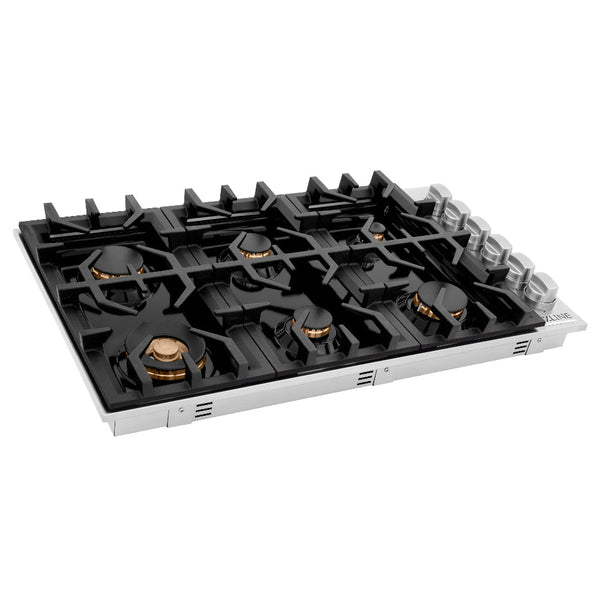
ZLINE 36 in. Gas Cooktop With 6 Brass Burners
The ZLINE 36 in. Gas Cooktop with 6 Brass Burners and Black Porcelain Top (RC-BR-36-PBT) is a strong option for homeowners who want generous cooking space and traditional gas performance.
Its six-brass-burner configuration provides room to prepare multiple dishes at once, making it particularly useful for larger households or people who frequently cook elaborate meals.
The black porcelain top also gives the cooktop a distinctive appearance while complementing a variety of kitchen styles.
For cooks who prefer direct flame control and want several burners available simultaneously, a 36-inch gas cooktop can be an excellent choice.
ZLINE Autograph Edition 30 in. Paramount Gas Rangetop
For homeowners looking for a more design-focused gas cooking solution, the ZLINE Autograph Edition 30 in. Paramount Gas Rangetop with 4 Burner DuoPro™ Cooktop in Black Satin Stainless Steel and Polished Gold Accents (PSRTBSZ-30-G) combines gas cooking with a statement-making aesthetic.
The black satin stainless steel finish and polished gold accents give this rangetop a more distinctive appearance than a standard stainless-steel appliance.
Its four-burner DuoPro™ configuration provides flexibility for everyday meals while maintaining the visual character of a premium kitchen.
This type of gas rangetop can work particularly well when appliance design is an important part of the overall kitchen aesthetic.
What Are the Downsides of Gas Cooktops?
Gas has plenty of advantages, but it isn't perfect for every kitchen.
Gas cooktops typically require a gas connection and proper ventilation. The open flame also means that spills can interact with the burner area, and cleaning may require more attention than a smooth induction surface.
The grates and burner components can also take more time to clean than a flat cooktop.
For homeowners prioritizing easy maintenance, modern induction technology may be more appealing.
Induction Cooktops: Fast, Precise, and Easy to Clean
Induction cooking has become increasingly popular because it combines fast heating with precise control and a sleek cooking surface.
Instead of heating a burner and then transferring heat into a pan, induction technology generates an electromagnetic field that heats compatible cookware directly.
The result is highly responsive cooking and a cooking surface that stays relatively cooler than traditional gas or electric cooking surfaces.
Benefits of Induction Cooktops
Some of the biggest advantages include:
- Fast heating
- Precise temperature control
- Smooth, modern appearance
- Easier cleanup
- No open flame
- Efficient transfer of heat to compatible cookware
- Cooking surface that is generally easier to wipe clean
Induction can be particularly appealing for busy households because the smooth surface allows spills and splatters to be cleaned more easily.
ZLINE 30 in. Induction Cooktop With 4 Burners
The ZLINE 30 in. Induction Cooktop with 4 Burners (RCIND-30) is a practical option for homeowners who want induction technology in a standard 30-inch cooking configuration.
With four cooking zones, it provides a balance between cooking capacity and countertop space.
A 30-inch induction cooktop can be a good fit for kitchens where efficiency and a clean appearance are priorities. Its smooth cooking surface also complements contemporary kitchen designs.
For households that regularly prepare several dishes but don't need six burners, a four-zone 30-inch induction cooktop can offer an effective combination of flexibility and space efficiency.
ZLINE 24 in. Induction Cooktop With 4 Burners
The ZLINE 24 in. Induction Cooktop with 4 Burners (RCIND-24) offers similar four-burner induction functionality in a more compact format.
This makes it especially relevant for smaller kitchens, apartments, condos, compact kitchen layouts, or homeowners who want to preserve more countertop space.
A smaller cooktop does not necessarily mean giving up the benefits of induction. If four cooking zones are sufficient for your everyday needs, a 24-inch configuration can provide a streamlined solution.
What Are the Downsides of Induction Cooktops?
The main consideration with induction cooking is cookware compatibility.
Induction requires cookware made with magnetic materials. If your existing pots and pans aren't compatible, you may need to replace some of them.
Induction cooktops can also have a higher initial purchase price than some conventional electric options. However, buyers should consider the overall cooking experience, energy efficiency, cleaning convenience, and long-term kitchen needs rather than comparing purchase prices alone.
If you're considering induction, check your cookware before purchasing. A simple magnet test can help determine whether many existing pans are induction-compatible.
Electric Cooktops: A Familiar and Practical Option
Traditional electric cooktops use electric heating elements to transfer heat to cookware. They are a familiar alternative to gas and can work well in homes where a gas connection isn't available or desired.
Electric cooking surfaces are available in different configurations, including exposed heating elements and smooth-top designs.
Benefits of Electric Cooktops
Electric cooktops can offer:
- Straightforward operation
- No gas connection required
- Broad cookware compatibility
- Consistent heat
- Familiar cooking performance
- Multiple installation options
For homeowners who don't want an open flame but aren't ready to switch to induction, electric cooking can provide a practical middle ground.
What Are the Downsides of Electric Cooktops?
Traditional electric heating elements generally take longer to heat up and cool down than gas or induction.
The cooking surface can also remain hot after the cookware has been removed. Smooth electric surfaces may be easier to clean than exposed coils, but spills can still bake onto the surface if they aren't cleaned promptly.
For cooks who value fast response and precise changes in temperature, induction or gas may be more appealing.
Gas vs. Induction vs. Electric: Which Is Fastest?
Cooking speed depends on the appliance, cookware, burner or zone size, and cooking task, but induction is widely recognized for its ability to heat compatible cookware quickly.
Gas provides immediate flame, while traditional electric heating elements typically take longer to reach their desired temperature.
If speed is one of your biggest priorities, induction deserves serious consideration. If you prefer the ability to visually monitor the flame, gas remains an attractive option.
Which Cooktop Offers the Best Temperature Control?
Temperature control is another area where cooking preferences matter.
Gas provides immediate visual feedback. You can increase or reduce the flame and see the change instantly.
Induction also offers highly responsive control because the cookware itself is heated directly.
Traditional electric cooking can be slower to respond because the heating element needs time to heat up or cool down.
For cooks who frequently move between high heat and low simmering, gas and induction are generally the strongest choices.
Which Cooktop Is Easiest to Clean?
If easy cleaning is important, induction has a significant advantage.
Because induction cooktops feature a flat cooking surface, there are fewer areas where food and grease can collect. Once the surface has cooled appropriately, many everyday spills can simply be wiped away.
Gas cooktops require cleaning around burner caps, grates, and other components. Food can also fall beneath or around the burner area.
Traditional electric cooktops can be relatively easy to maintain, particularly smooth-top versions, but baked-on spills may require additional cleaning.
For homeowners who want to minimize daily kitchen maintenance, induction is worth considering.
Which Cooktop Is Safest?
All three technologies can be used safely when installed and operated correctly.
Induction has the advantage of not producing an open flame. The cookware itself becomes the primary heat source, although the surface can still become warm during cooking.
Gas produces an open flame, so appropriate ventilation and safe cooking practices are important.
Electric cooktops do not use an open flame, but their heating elements and surfaces can remain hot after cooking.
Families should consider their household needs, cooking habits, ventilation setup, and manufacturer's safety instructions when selecting a cooktop.
Which Cooktop Works With Your Existing Cookware?
Cookware compatibility can make the decision easier.
Gas is generally the most flexible option because it can accommodate many types of cookware.
Electric cooktops are also compatible with a broad selection of pots and pans, although cookware should have a suitable base for the cooking surface.
Induction requires magnetic cookware. Cast iron and many magnetic stainless-steel pans work well, while some aluminum, copper, glass, and nonmagnetic stainless-steel cookware may not work unless specifically designed for induction.
Before buying an induction cooktop, review your current cookware and determine which pieces you'll need to replace.
Which Cooktop Is Best for Your Kitchen Design?
Your kitchen's design can also influence your decision.
Gas cooktops can create a professional, restaurant-inspired appearance, especially when paired with brass burners, stainless steel finishes, or premium rangetops.
The ZLINE 36 in. Gas Cooktop with six brass burners is suited to homeowners who want a larger cooking surface with a bold traditional aesthetic. Meanwhile, the ZLINE Autograph Edition Paramount Gas Rangetop adds a more decorative appearance with black satin stainless steel and polished gold accents.
Induction cooktops typically offer a minimalist appearance. The ZLINE RCIND-30 and RCIND-24 can blend naturally into contemporary kitchens where clean lines and uncluttered surfaces are priorities.
Which Size Should You Choose?
Cooktop size should reflect both your kitchen layout and cooking habits.
A 24-inch cooktop can be useful in compact kitchens where countertop space is limited. The ZLINE RCIND-24 provides four induction burners while maintaining a smaller footprint.
A 30-inch cooktop is a versatile choice for many standard kitchen layouts. The ZLINE RCIND-30 offers four induction burners while providing additional surface area compared with a compact 24-inch configuration.
A 36-inch cooktop makes more sense for homeowners who frequently cook multiple dishes at once or want additional burner space. The ZLINE RC-BR-36-PBT provides six brass burners for expanded cooking capacity.
A 30-inch gas rangetop such as the ZLINE Autograph Edition Paramount PSRTBSZ-30-G can provide a balance between cooking functionality and a statement appliance design.
Gas vs. Induction vs. Electric: Which Should You Buy?
There is no single cooktop technology that is perfect for every household.
Choose gas if you:
- Prefer cooking with an open flame
- Want immediate visual temperature control
- Frequently use high-heat cooking techniques
- Want broad cookware compatibility
- Prefer a traditional or professional-style cooking experience
Choose induction if you:
- Want fast and responsive cooking
- Prefer a smooth, modern cooking surface
- Want easier cleanup
- Don't need an open flame
- Are comfortable using induction-compatible cookware
Choose electric if you:
- Don't have or don't want a gas connection
- Want a familiar cooking method
- Need broad cookware compatibility
- Prefer a straightforward electric cooking solution
Final Thoughts
The decision between gas, induction, and electric ultimately comes down to how you cook and what you value most in your kitchen.
Gas remains a strong choice for cooks who love direct flame control and professional-style cooking. ZLINE's RC-BR-36-PBT is worth considering when you want six brass burners and a spacious 36-inch cooking surface, while the PSRTBSZ-30-G offers four-burner gas cooking with a distinctive black satin stainless steel and polished gold design.
Induction is an excellent option for homeowners who prioritize speed, precision, easy cleaning, and a contemporary appearance. The ZLINE RCIND-30 provides four induction burners in a 30-inch format, while the RCIND-24 delivers four burners in a more compact 24-inch design.
Traditional electric cooktops remain a practical choice for homeowners who want straightforward electric cooking without an open flame.
Before making your final decision, consider your cooking habits, available utilities, cookware, kitchen dimensions, cleaning preferences, and desired aesthetic. By matching the cooktop technology to the way you actually use your kitchen, you can choose an appliance that performs well today and continues to meet your needs for years to come.