There is a level of precision that only comes from understanding how air moves through a kitchen. In the modern home, ventilation is no longer just about removing smoke it’s about balancing airflow, performance, design, and everyday cooking comfort.
Choosing a 36-inch range hood involves more than simply comparing appearance or airflow numbers on a spec sheet. Kitchen layout, cooking style, installation requirements, and long-term maintenance all play a role in how well a range hood actually performs once it is installed and in daily use.
Among ZLINE's most frequently compared 36-inch models are the 8654STZ-36, the KB-36, and the KECOM-36. These three range hoods fall into the same size category, but they are built for noticeably different kitchens and cooking environments. The 8654STZ-36 and the KB-36 are both wall-mount range hoods designed for kitchens where the cooking surface sits against a wall, while the KECOM-36 is an island range hood intended for ceiling-mounted installation above a kitchen island.
Quick Comparison
The 8654STZ-36 is a wall-mount hood capable of up to 700 CFM of airflow, with four fan speeds and a noise range of roughly 30 to 51 decibels. It measures 36 inches wide and is best suited for heavy cooking and premium kitchens. The KB-36 is also a wall-mount hood, but it offers slightly more airflow at up to 760 CFM, with the same four fan speeds and a noise range of approximately 30 to 52 decibels. At 36 inches wide, it is positioned as a strong fit for everyday residential cooking. The KECOM-36, by contrast, is an island range hood with up to 700 CFM of airflow, four fan speeds, and a noise range of roughly 35 to 55 decibels. Also 36 inches wide, it is designed for island cooktops and open kitchens. As with most appliances, specifications may vary slightly depending on the production version and the specific installation configuration.
Understanding the Main Differences
The most important difference between these three range hoods comes down to installation style. The 8654STZ-36 is a wall-mount, chimney-style hood, and the KB-36 is also a wall-mount, chimney-style hood, while the KECOM-36 is a ceiling-mounted island hood. This single difference ripples outward and affects smoke capture efficiency, installation cost, duct routing, airflow behavior, noise perception, and overall kitchen compatibility.
Wall-mounted range hoods generally capture smoke more efficiently because the wall behind the cooking surface helps contain and direct airflow toward the hood. Island hoods, on the other hand, operate in open space without any surrounding walls, which means smoke and steam tend to spread more quickly. As a result, island hoods often require wider airflow coverage and more careful positioning to perform well. This is part of why island range hoods can feel noticeably different in daily use compared to wall-mounted systems, even when their airflow ratings appear similar on paper.
ZLINE 8654STZ-36 Review
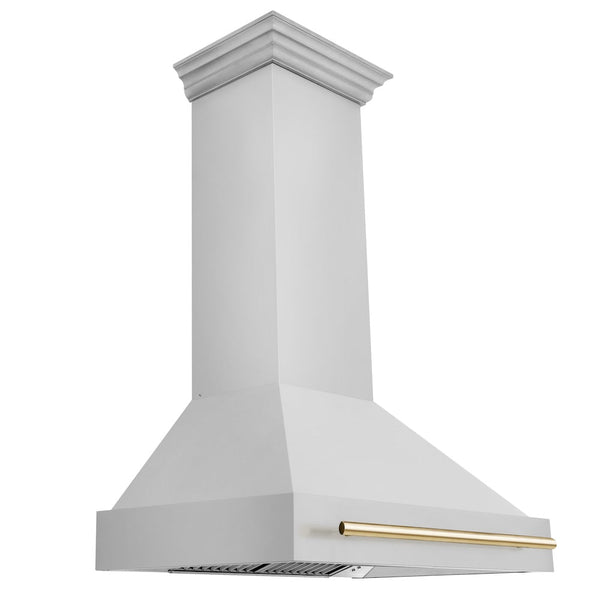
The ZLINE 8654STZ-36 is positioned as a more premium wall-mount range hood designed for heavier cooking applications and larger kitchen setups. This model is part of ZLINE's Autograph Edition line, which focuses on upgraded finishes and a more design-oriented appearance throughout. It is commonly installed above 36-inch gas ranges, professional-style cooktops, high-output burners, and other larger residential cooking surfaces where both performance and presentation matter.
Key Features
The 8654STZ-36 typically includes a wall-mounted chimney installation, airflow of up to 700 CFM, four fan speeds, integrated LED lighting, dishwasher-safe baffle filters, and support for external ducting, all wrapped in the distinctive Autograph Edition styling. The overall design is intended to combine stronger ventilation performance with a more premium visual presence in the kitchen.
Airflow Performance
The 8654STZ-36 is designed for kitchens where cooking regularly produces smoke, heat, grease, or strong odors. It performs well during frying, searing, high-heat cooking, multi-burner cooking, and frequent meal preparation. Its higher airflow becomes especially useful in kitchens using gas ranges with stronger BTU output, and during heavy cooking, the hood clears smoke and heat more effectively than lighter residential ventilation systems are typically able to manage.
Real-World Ventilation Experience
In practical use, the stronger airflow of the 8654STZ-36 helps reduce lingering cooking smells, oil particles suspended in the air, steam buildup, and excess kitchen heat. This difference becomes more noticeable in homes where cooking happens daily and the kitchen needs to recover quickly between meals. However, it is worth keeping in mind that stronger airflow is only genuinely beneficial when it is paired with proper ducting, since poor duct routing can reduce performance significantly even on a higher-CFM system like this one.
Noise Levels
The 8654STZ-36 operates at approximately 30 to 51 decibels depending on the speed setting and the specific installation conditions. At lower settings, the hood is generally manageable during family conversation, routine cooking, and general kitchen activity. At higher settings, the sound becomes more noticeable simply because the blower is moving a much larger volume of air, which is a common characteristic of stronger ventilation systems in general.
Design and Kitchen Compatibility
The 8654STZ-36 has a more substantial appearance than many standard residential range hoods. It tends to work especially well in kitchens that feature professional-style appliances, stainless steel finishes, larger cooking surfaces, modern layouts, or commercial-inspired design elements. The chimney structure itself creates a more visible focal point compared to smaller or simpler hood designs.
Strengths and Tradeoffs of the 8654STZ-36
On the positive side, the 8654STZ-36 offers strong ventilation for heavy cooking, premium Autograph Edition styling, suitability for larger gas ranges, generous lighting coverage, and multiple fan speed options, all of which add up to effective grease and smoke management. At the same time, there are some tradeoffs to keep in mind. Noise levels are higher at maximum speed, the model is more expensive than standard wall-mount hoods, it requires proper duct planning to achieve its best results, and it may feel oversized in smaller kitchens.
Best Kitchen Type for the 8654STZ-36
This model tends to work best in medium and large kitchens, in homes where cooking happens frequently, in kitchens built around high-BTU gas ranges, in modern kitchen remodels, and for homeowners who specifically want a more premium ventilation design as part of their overall kitchen aesthetic.
ZLINE KB-36 Review
The ZLINE KB-36 is one of the company's most commonly used wall-mount range hoods. Unlike the 8654STZ-36, the KB-36 focuses more on practical residential ventilation rather than premium positioning. It is designed for homeowners who want dependable airflow for everyday cooking without stepping into more specialized, high-performance ventilation territory. One important clarification worth noting is that the KB-36 is not an under-cabinet range hood. It is a wall-mount, chimney-style model designed for installation against a wall.
Key Features
The KB-36 generally includes a wall-mounted chimney design, airflow of up to 760 CFM, four-speed fan control, integrated LED lighting, dishwasher-safe baffle filters, and support for ducted ventilation. The overall design focuses more on usability and broad residential compatibility than on standout visual styling.
Everyday Cooking Performance
The KB-36 performs well across typical residential cooking environments. It is well suited to daily meal preparation, moderate cooking activity, standard gas cooking, electric cooktops, and the average household's ventilation needs. For many households, the KB-36 provides enough airflow to handle everyday cooking without feeling overly aggressive or industrial in feel.
Practical Airflow Balance
Some buyers assume that higher airflow always translates into better performance, but in practice, excessive airflow can introduce its own drawbacks, including increased noise, stronger drafts, more noticeable air movement throughout the kitchen, and additional makeup air concerns in tightly sealed homes. The KB-36 tends to work well precisely because it strikes a reasonable balance between airflow and everyday usability for most residential kitchens.
Noise Levels
The KB-36 operates at roughly 30 to 52 decibels depending on the fan speed and installation setup. At lower speeds, the hood remains fairly comfortable for routine kitchen activity, while higher speeds are available when additional ventilation is needed during heavier cooking sessions. Compared to more aggressive ventilation systems, the KB-36 often feels more manageable in kitchens that are connected directly to living or dining areas, where noise carries more easily.
Design and Appearance
The KB-36 uses a straightforward chimney-style design that fits comfortably into many kitchen styles without dominating the room visually. It tends to work well in contemporary kitchens, transitional kitchens, mid-range remodels, and standard residential layouts more broadly. Its appearance is noticeably simpler than the Autograph Edition styling found on the 8654STZ-36.
Strengths and Tradeoffs of the KB-36
On the positive side, the KB-36 offers balanced residential airflow, practicality for daily use, straightforward installation, suitability for many kitchen layouts, comfortable lower-speed operation, and strong overall value for standard kitchens. On the other hand, its visual styling is less premium, its higher settings may be more than necessary for smaller homes, it is not intended for extremely heavy cooking environments, and its overall appearance is simpler than some buyers may want if a statement piece is the goal.
Best Kitchen Type for the KB-36
The KB-36 tends to work best in standard residential kitchens, in households with medium cooking demands, in wall-mounted kitchen layouts, and for homeowners who want a balance of airflow and usability without paying for more specialized performance features.
ZLINE KECOM-36 Review
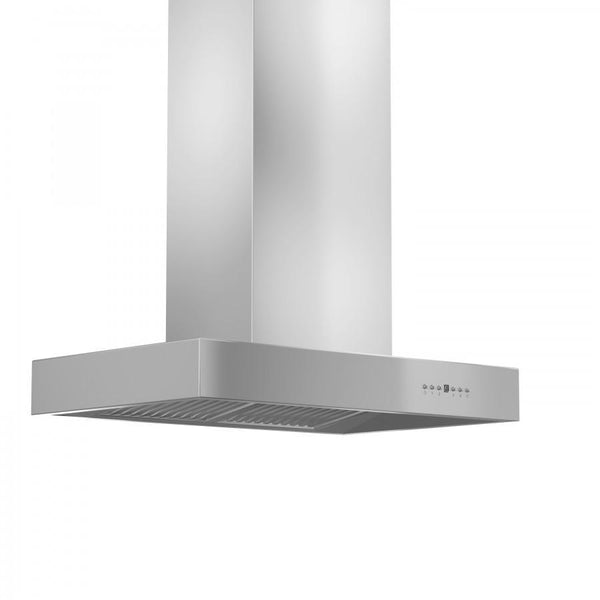
The ZLINE KECOM-36 differs significantly from the other two models because it is built specifically for island installation. Rather than attaching to a wall, it hangs from the ceiling above an island cooktop or range. Island ventilation introduces a different set of airflow challenges, simply because the cooking area sits out in open space rather than against a wall.
Key Features
The KECOM-36 generally includes island-mounted ceiling installation, airflow of up to 700 CFM, a four-speed blower system, integrated LED task lighting, support for external ducting, and a wide airflow coverage area. The overall design prioritizes open-kitchen ventilation while maintaining a modern, suspended appearance that suits contemporary spaces.
Island Ventilation Challenges
Island kitchens create more open-air movement than wall-mounted cooking setups. Without surrounding walls, smoke spreads faster, steam disperses more widely, grease particles travel further before settling, and ambient air currents have a greater effect on capture efficiency. This means island hoods generally require stronger coverage positioning in order to maintain good performance compared to their wall-mounted counterparts.
Real-World Cooking Performance
The KECOM-36 performs well in open-concept kitchens, in homes with island cooktops, in larger kitchen layouts, and in contemporary kitchen designs more generally. That said, even a strong island hood may appear slightly less effective than a wall-mounted model during heavy cooking, simply because the cooking surface is fully exposed on all sides. This is a normal characteristic of island ventilation systems rather than a flaw specific to this model.
Noise Levels
The KECOM-36 typically operates at roughly 35 to 55 decibels depending on fan speed and room acoustics. Island hoods often seem louder than wall-mounted hoods because they are positioned centrally within open rooms, and sound travels more freely without surrounding walls to absorb or contain it. This does not necessarily mean the blower itself is significantly louder than the blowers in wall-mounted models; the sound is simply more exposed within the room.
Design and Kitchen Appearance
Island hoods become highly visible simply because they hang directly in open space, and the KECOM-36 is designed to function both as a ventilation appliance and as a visual element within the kitchen's overall layout. It tends to work especially well with large islands, in open-concept homes, in modern kitchens, and in minimalist kitchen designs where a suspended fixture can serve as a design feature in its own right.
Strengths and Tradeoffs of the KECOM-36
On the positive side, the KECOM-36 is designed specifically for island kitchens, offers wide airflow coverage, has a modern suspended appearance, and works well with open layouts and larger islands. On the other hand, its installation is more complex, its installation cost is higher, its noise is more noticeable in open spaces, and it requires careful positioning in order to achieve the best possible airflow capture.
Best Kitchen Type for the KECOM-36
The KECOM-36 tends to work best in open-concept kitchens, in homes that specifically need ceiling-mounted ventilation, in large island cooking layouts, and in contemporary residential kitchens where a suspended hood fits the overall design language.
Installation Comparison
Installation quality affects performance almost as much as the hood itself, and even a strong range hood can underperform if it is paired with poor duct planning.
The 8654STZ-36 and the KB-36 both use wall-mounted chimney installations, which generally come with several benefits. Duct routing tends to be easier, smoke containment tends to be better thanks to the wall behind the cooktop, overall installation complexity is lower, and structural support requirements are simpler. Wall-mounted hoods are generally easier to install precisely because the wall provides mounting stability and naturally helps guide airflow toward the hood.
The KECOM-36, by contrast, requires ceiling reinforcement, suspension mounting, longer duct runs, more precise positioning, and additional labor planning overall. Because the structure involved is more complicated, island hood installation is usually more expensive than installing a comparable wall-mounted hood.
Ducting Considerations
Duct planning matters heavily for all three models, regardless of which one you choose. For the best results, duct runs should be kept as short as possible, sharp bends should be minimized, proper duct sizing should be used throughout, and venting externally is generally preferable whenever it is an option. Poor ducting can reduce airflow efficiency, weaken grease capture, undermine noise control, and lower overall ventilation performance across the board. Long duct runs can also increase fan noise, since the blower has to work harder to move air efficiently through a longer or more restrictive path.
The Importance of Proper Venting
Some homeowners focus almost exclusively on CFM ratings while overlooking the design of the ventilation path itself. In practice, a properly ducted 700 CFM hood can often outperform a poorly installed system with a higher CFM rating. Good airflow ultimately depends on the entire ventilation setup working together, not just on the strength of the motor alone.
Cleaning and Maintenance
All three models use dishwasher-safe baffle filters, which are commonly preferred over mesh filters because they handle grease more effectively, tend to last longer, maintain airflow better over time, and are generally easier to clean.
Cleaning Frequency
Cleaning needs depend mostly on cooking habits. Households that cook heavily may need to clean filters on a roughly monthly basis, wipe surfaces more frequently, and remove grease buildup on a regular schedule. Households that cook more lightly will generally be able to get away with less frequent maintenance overall.
Surface Maintenance
Routine cleaning helps reduce fingerprints, grease buildup, and surface discoloration over time. Non-abrasive cleaners are generally recommended for maintaining the finish on any of these three models.
Lighting Performance
All three models use integrated LED lighting systems, and task lighting becomes especially useful during evening cooking, multi-pan cooking, and detailed meal preparation where good visibility over the cooking surface really matters.
The 8654STZ-36 provides strong cooktop coverage suitable for larger ranges, making it well suited to wider cooking surfaces where even illumination across the whole range matters. The KB-36 focuses more on practical lighting tailored to standard residential cooking, providing solid coverage without unnecessary extras. On the KECOM-36, lighting becomes more visually noticeable simply because the fixture hangs openly within the room, and the model combines task lighting with a suspended, modern appearance that contributes to the overall look of the kitchen.
ZLINE Lifetime Motor Warranty
One advantage that runs across many ZLINE range hoods, including these three models, is a lifetime motor warranty. This adds meaningful long-term ownership value, especially for buyers who are planning a permanent kitchen upgrade rather than a short-term fix. That said, installation quality still matters a great deal, since poor ducting can place unnecessary strain on the blower system over time, even with a strong warranty in place.
Common Buyer Mistakes
A handful of mistakes tend to come up again and again when homeowners shop for range hoods.One common mistake is choosing a hood based only on its CFM rating. Higher airflow does not automatically translate into better overall performance, and oversized ventilation can lead to excess noise, stronger air movement throughout the kitchen, and higher installation demands than necessary. A better approach is to match airflow to actual cooking habits rather than simply chasing the highest number available.
Another common mistake is ignoring kitchen layout when making a decision. Island kitchens generally call for island hoods, while wall-mounted kitchens work best with wall-mounted hoods. The structure of the kitchen itself should guide this decision first, before other factors come into play. A third common mistake is overlooking duct planning entirely. Buyers often spend a great deal of time comparing hood specifications while paying little attention to how the ductwork will actually be configured, even though poor duct planning can reduce overall performance significantly regardless of the hood's airflow rating.
Which Model Should You Choose?
The 8654STZ-36 tends to be the right choice if you cook frequently at high heat, if you want stronger ventilation overall, if you prefer the premium look of the Autograph Edition styling, if you have a larger gas range, and if your kitchen is set up to support stronger airflow systems without issue.
The KB-36 tends to be the right choice if you want dependable residential ventilation, if your cooking style is generally moderate rather than intense, if you prefer a balance of airflow and everyday usability, if you want a practical wall-mount design, and if your kitchen does not call for extremely aggressive airflow.
The KECOM-36 tends to be the right choice if your cooktop sits on an island, if you have an open-concept layout, if you specifically need ceiling-mounted ventilation, if you want a suspended, modern hood design, and if your kitchen requires wider airflow coverage to compensate for the lack of surrounding walls.
Final Thoughts
The ZLINE 8654STZ-36, KB-36, and KECOM-36 all serve different purposes despite sharing the same 36-inch size category. The 8654STZ-36 is better suited for heavier cooking and premium kitchen layouts, the KB-36 focuses on balanced residential ventilation for daily use, and the KECOM-36 is designed specifically for island kitchens where open-air ventilation becomes more challenging to manage.
Rather than focusing only on airflow numbers, buyers should think about kitchen layout, cooking frequency, duct planning, installation complexity, noise expectations, and overall ventilation requirements together as a whole. Choosing the right hood style for the actual structure of the kitchen usually has a bigger impact on long-term satisfaction than simply choosing the model with the highest advertised airflow rating.
FAQs
Is the ZLINE KB-36 an under-cabinet range hood?
No. The ZLINE KB-36 is a wall-mount, chimney-style range hood designed for installation on a wall above the cooking surface.
What makes the 8654STZ-36 different from the KB-36?
The 8654STZ-36 is part of ZLINE's Autograph Edition lineup and is positioned more toward premium kitchens and heavier cooking applications, while the KB-36 focuses more on balanced residential ventilation for standard kitchen use.
Is the KECOM-36 suitable for wall installation?
No. The KECOM-36 is an island range hood designed specifically for ceiling-mounted installation above kitchen islands.
Why does ducting matter for range hood performance?
Poor duct planning can reduce airflow efficiency and increase noise levels, while shorter duct runs with fewer bends generally provide better overall ventilation performance regardless of the hood's CFM rating.